


Greenwashing: Don't get sucked into Earth Day false marketing


I get salty and worked up every year as Earth Day rolls around and suddenly everything is "green". Brands swap their packaging to earthy tones and beige. SEO happy buzzwords like “eco-friendly,” “natural,” and “sustainable” get tossed onto labels like the glitter you can't escape. Companies spotlight their limited-edition “planet-conscious” collections.
But it's all a part of the paradox of modern environmentalism: the louder sustainability becomes as a marketing strategy, the harder it is to tell what actually helps the planet... because ultimately - they're still convincing you to BUY BUY BUY.
The Rise of Greenwashing around Earth Day
It's not always obvious because it's usually subtle. It looks like vague claims without proof. It sounds like progress without measurable impact. It feels good in the moment, which is exactly why it works.

A company might promote a single “eco” product line while the rest of its business runs unchanged. Others might highlight recycled packaging while quietly scaling production to record highs. Some lean heavily on carbon offsets without actually putting any efforts into reducing emissions in any meaningful way.
The result? Consumers are encouraged to keep buying, just with a "cleaner" conscience (literally and figuratively).
We feel better with “Better” Consumption
The uncomfortable reality: most green marketing relies on the same core idea as non-green marketing. Consume more, just "differently". Swap plastic for bamboo. Replace fast fashion with “sustainable” fashion. Upgrade your gear to something “greener.”
It’s not that these swaps are inherently bad. In the end, maybe they are improvements. But they don't address the bigger issue: the sheer volume of stuff we produce, buy, and throw away. Is it a NEED? And is it a need NOW? Once your item is DONE, then make the swap. Don't pre-ditch something that is working.
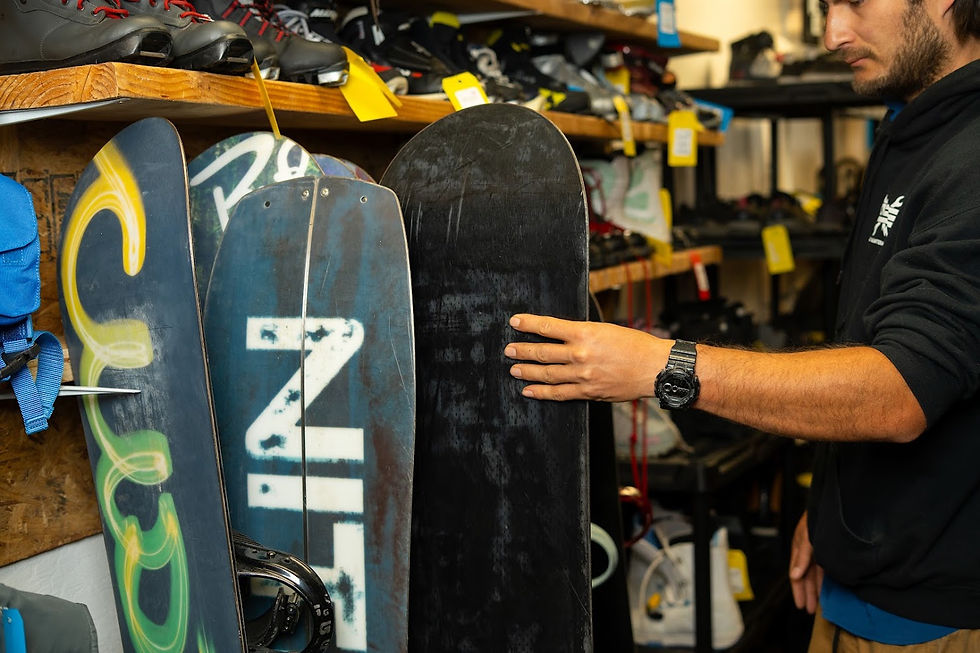
This whole cycle is something we think about a lot at Gear Hut; the catch 22. We’re built on a more sustainable version of consumerism because buying used, extending the life of gear, keeping things out of landfills is all "better". And that matters. It genuinely reduces waste and demand for new production. But it’s still part of a system that revolves around BUYING things. It's what keeps my family alive. It's beyond conflicting. Feeling so strong about being anti consumerism yet creating a place for folks to consume is what is our results in our income - and it often comes with guilt as I post things on social media or send emails getting people to "buy, buy, buy".
So Anyways... Before I get too dark and deep into the circles of my brain...

Let's be intentional as we approach Earth Day:
1. Buy less, use longer: The most sustainable product is the one you already own! Repair it. Maintain it. Get the full life out of it before replacing it.
2. When you do buy, shift the lifecycle: Shop used. It’s about reducing demand for new production and keeping functional items in use. It’s one of the most practical ways to shrink your footprint. Or shop with the mindset of high quality, one time investment.
3. Question the label:“Eco-friendly” doesn’t mean much without specifics. Look for transparency: materials, supply chains, labor practices, and actual numbers. Not just packaging design.
4. Support systems, not just products: Sustainability isn’t just about what you buy, it’s about what you support! Local repair shops, reuse models, and circular businesses often do more good than any single “green” product ever could. Volunteer! Conserve water! Write to oppose golf course.
5. Accept imperfection: None of us navigate this perfectly. Not individuals, not businesses. Don't get shamed for grabbing a disposable fork here and there... it's not all on just YOU. It’s little bits of progress from us all that adds up over time.
A More Honest Earth Day: Take less showers

The truth is, there’s no version of consumerism that’s completely sustainable. But there are ways to make it less wasteful, less extractive, and more thoughtful as we navigate our time on this beautiful planet.
So here's to continuing to ask better questions to guide our consumerism:
Do I actually NEED this?
Is there a way to get it without creating a new demand? Borrow from a friend? Rent it? Buy it used?
How long will I actually use it?
What happens to it when I’m done? What is it's end of product life journey?
Do I actually need to shower today or should I save water? Just kidding. Hygiene is important in "regular society" sometimes.
-Leah out. Thanks for rambling with me.


Comments